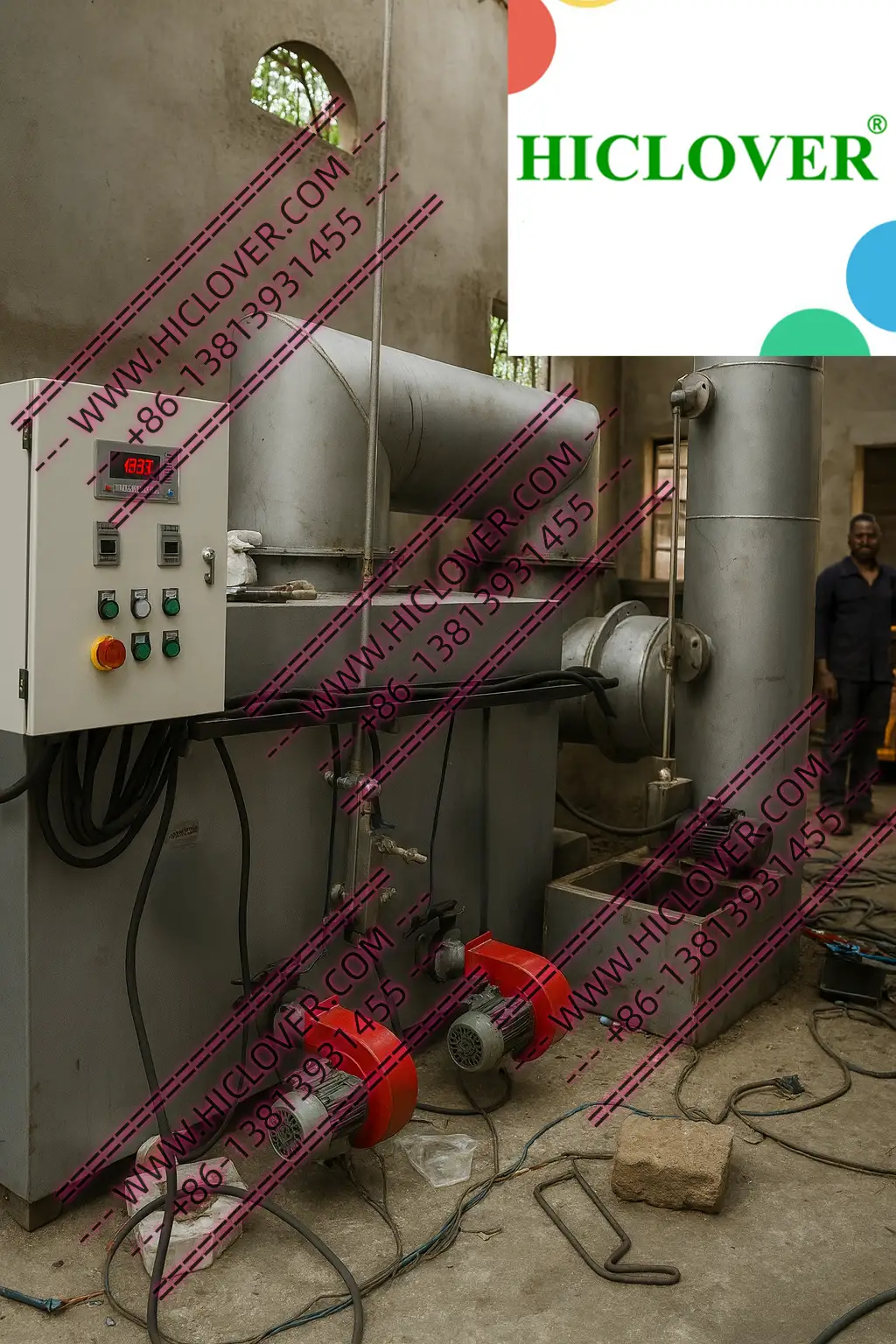
Botswana Waste Incinerator Market Report: Healthcare-Driven Demand, Landfill Pressure, and Deployment Scenarios
(Gaborone – Francistown – Maun – Kasane – Selebi-Phikwe – Lobatse – Jwaneng)
1) Market snapshot: why Botswana is a “regulated, landfill-stressed, healthcare-led” incineration market
In Botswana, incinerator demand is shaped by two overlapping forces:
-
Landfill and collection constraints near major urban centers, especially around Gaborone, where landfill operations have been significant enough to trigger official management reviews and research partnerships focused on operational/environmental challenges.
-
A formal waste governance structure that requires licensing/registration for waste-related activities and facilities, including incinerators as a regulated facility type.
This combination creates a market where incineration is most defensible for targeted waste streams—particularly healthcare (clinical/infectious) waste—rather than for burning all municipal solid waste.
2) Where the real demand is: Botswana’s buyer segments
A) Healthcare waste (the most consistent procurement driver)
Botswana has published guidance and assessments that treat healthcare waste management as a structured system requiring standards and compliance. UNICEF’s country assessment notes the existence of a Clinical Waste Management Code of Practice and evaluates national HCWM practices.
In practical procurement terms, this translates into recurring demand from:
-
National and district hospitals in Gaborone and Francistown
-
Regional facilities serving Maun and Kasane (tourism corridor and remote catchments)
-
Laboratories, clinics, and immunization programs across secondary cities such as Selebi-Phikwe, Lobatse, and Jwaneng
Botswana’s own waste strategy documents have noted that clinical-waste incinerators have been poorly managed and may require upgrading, reinforcing a replacement/upgrade market—not only new-build demand.
B) Municipal and landfill-adjacent waste fractions (selective demand)
Botswana’s municipal waste story is strongly linked to landfill operations (e.g., Gamodubu Regional Landfill associated with the Gaborone region). Government and university materials explicitly describe work focused on landfill operational and environmental challenges.
This does not automatically convert into “mass MSW incineration.” Instead, it creates interest in incineration for:
-
non-recyclable, high-nuisance fractions
-
institutional and controlled waste streams
-
event-driven surges where landfill handling becomes politically sensitive
C) Donor / UN-linked health and WASH programs (specification setters)
Even when the procurement is not directly “UN-branded,” UN frameworks and assessments influence how Botswana projects are specified—especially around healthcare waste controls, training, and monitoring. UNICEF’s HCWM assessment is an example of this standard-setting role.
3) Trends shaping Botswana incinerator procurement
Trend 1 — Licensing and compliance are increasingly explicit
Botswana’s government service guidance frames “waste management facility” licensing as covering facilities such as landfills and incinerators, with annual renewal, which pushes buyers toward documented, supportable systems rather than improvised burners.
Trend 2 — Upgrade/rehabilitation demand is as important as new demand
Botswana’s waste strategy explicitly notes operational weaknesses in existing clinical waste incinerators and the need for upgrading.
This favors vendors who can provide:
-
retrofit paths (controls, refractory, burners)
-
training packages
-
predictable spares planning
Trend 3 — Landfill performance pressure supports decentralized treatment
As research and municipal partnerships focus on landfill challenges (notably around the Gaborone region), many organizations prefer decentralized treatment for regulated waste (especially healthcare waste) to reduce transport risk and landfill burden.
4) Technical fit for Botswana: what works in Gaborone vs Maun/Kasane
Best-fit configuration in Botswana
For Botswana’s conditions and compliance expectations, the most practical incinerator configuration is typically:
-
Primary combustion chamber (solid waste destruction)
-
Secondary combustion chamber (afterburning of flue gas to improve burn-out and reduce smoke visibility)
-
Simple, maintainable controls suited to variable operator skills
-
Fuel selection based on site logistics (diesel is often operationally straightforward in remote settings; gas where stable supply exists)
This is particularly relevant for dense or high-visibility areas like Gaborone and Francistown, where smoke complaints can quickly stop operations.
Operational theme for Botswana
A frequent failure mode in clinical waste projects is not “capacity,” but operations discipline: segregation, loading routine, ash handling, and preventive maintenance. Botswana-specific HCWM assessments and reviews emphasize system-level practice rather than just equipment presence.
5) The role of UN agencies and international institutions in Botswana
In Botswana, UN-related engagement often appears as:
-
assessment and benchmarking (e.g., UNICEF HCWM country assessment)
-
pressure toward monitoring frameworks, training, and environmental safeguards
This shifts procurement toward suppliers who can deliver:
-
commissioning documentation
-
SOPs and training
-
lifecycle support (spares + maintenance planning)
6) HICLOVER positioning for Botswana
Botswana aligns well with a strategy built around reliable healthcare waste destruction plus optional scaling for institutional needs.
HICLOVER advantages to highlight in Botswana
-
Two-stage combustion options (better burn-out and reduced smoke risk for urban sites like Gaborone and Francistown)
-
Containerized / mobile deployment that can be practical for remote coverage zones (e.g., Maun, Kasane) where site works and technical service are constrained
-
Scalable product range for clinic-to-hospital-to-network rollouts
-
Supportable design philosophy: maintenance-accessible systems with predictable consumables and spares planning (important under annual licensing and audit conditions)
HICLOVER keyword links (3–5 core anchors)
-
Containerized Mobile Incinerators: https://www.hiclover.com/containerized-mobile-incinerators/
-
Double Combustion Chamber Containerized Mobile Incinerator: https://www.hiclover.com/double-combustion-chamber-containerized-mobile-incinerator-2/
-
Containerized Hospital Waste Incinerator (CA100): https://www.hiclover.com/containerized-type-pre-assembled-mobile-hospital-waste-incinerator-model-ca100/
-
Medical Waste Incinerator Models (TS Series analysis): https://www.hiclover.com/backup/hiclover-ts-model-incinerator-2/
7) A Botswana-specific theme to emphasize
Theme: “Remote-coverage reliability” (Maun–Kasane corridor + city hubs)
Botswana’s geography and service distribution make “keep it running” more valuable than “most advanced features.” A strong Botswana narrative is:
-
Urban hub installations in Gaborone / Francistown (training + SOP validation)
-
Replication to remote catchments serving Maun and Kasane (containerized or quick-install models, standardized spares kit)
-
Annual-cycle compliance support aligned with facility licensing expectations
www.southclover.com
Botswana, centered on Gaborone and Francistown with operational extensions toward Maun, Kasane, Selebi-Phikwe, Lobatse, and Jwaneng, is best understood as a market where incineration demand is strongest for healthcare waste and other controlled waste streams. Regulatory licensing expectations and ongoing landfill management challenges favor reliable, documented, two-stage combustion systems paired with training and lifecycle support—an approach that fits both national compliance pressures and remote-operations reality.
Résumé en français
Le Botswana (avec Gaborone et Francistown comme pôles principaux, et des zones clés comme Maun et Kasane) présente un marché des incinérateurs surtout tiré par les déchets médicaux et les exigences de conformité. Les licences pour les installations (y compris les incinérateurs) et la pression sur les décharges orientent la demande vers des solutions robustes, documentées, et à double chambre de combustion, accompagnées de formation opérateur et de support pièces/maintenance.
2025-12-12/10:32:27
|
Incinerator Items/Model |
HICLOVER TS100(PLC)
|
|
Burn Rate (Average) |
100kg/hour |
|
Feed Capacity(Average) |
150kg/feeding |
|
Control Mode |
PLC Automatic |
|
Intelligent Sensor |
Continuously Feeding with Worker Protection |
|
High Temperature Retention(HTR) |
Yes (Adjustable) |
|
Intelligent Save Fuel Function |
Yes |
|
Primary Combustion Chamber |
1200Liters(1.2m3) |
|
Internal Dimensions |
120x100x100cm |
|
Secondary Chamber |
600L |
|
Yes |
|
|
Feed Mode |
Manual |
|
Burner Type |
Italy Brand |
|
Temperature Monitor |
Yes |
|
Temperature Thermometer |
Corundum Probe Tube, 1400℃Rate. |
|
Temperature Protection |
Yes |
|
Automatic Cooling |
Yes |
|
Automatic False Alarm |
Yes |
|
Automatic Protection Operator(APO) |
Yes |
|
Time Setting |
Yes |
|
Progress Display Bar |
3.7 in” LCD Screen |
|
Oil Tank |
200L |
|
Chimney Type |
Stainless Steel 304 |
|
1st. Chamber Temperature |
800℃–1000℃ |
|
2nd. Chamber Temperature |
1000℃-1300℃ |
|
Residency Time |
2.0 Sec. |
|
Gross Weight |
7000kg |
|
External Dimensions |
270x170x190cm(Incinerator Main Body) |
|
Burner operation |
Automatic On/Off |
|
Dry Scrubber |
Optional |
|
Optional |
|
|
Top Loading Door |
Optional |
|
Asbestos Mercury Material |
None |
|
Heat Heart Technology(HHT) |
Optional |
|
Optional |
|
|
Dual Control Mode(Manual/Automatic) |
Optional |
|
Temperature Record |
Optional |
|
Enhanced Temperature Thermometer |
Optional |
|
Incinerator Operator PPE Kits |
Optional |
|
Backup Spare Parts Kits |
Optional |
|
Mobile Type |
Optional:Containerized/Trailer/Sledge Optional |


Comments are closed