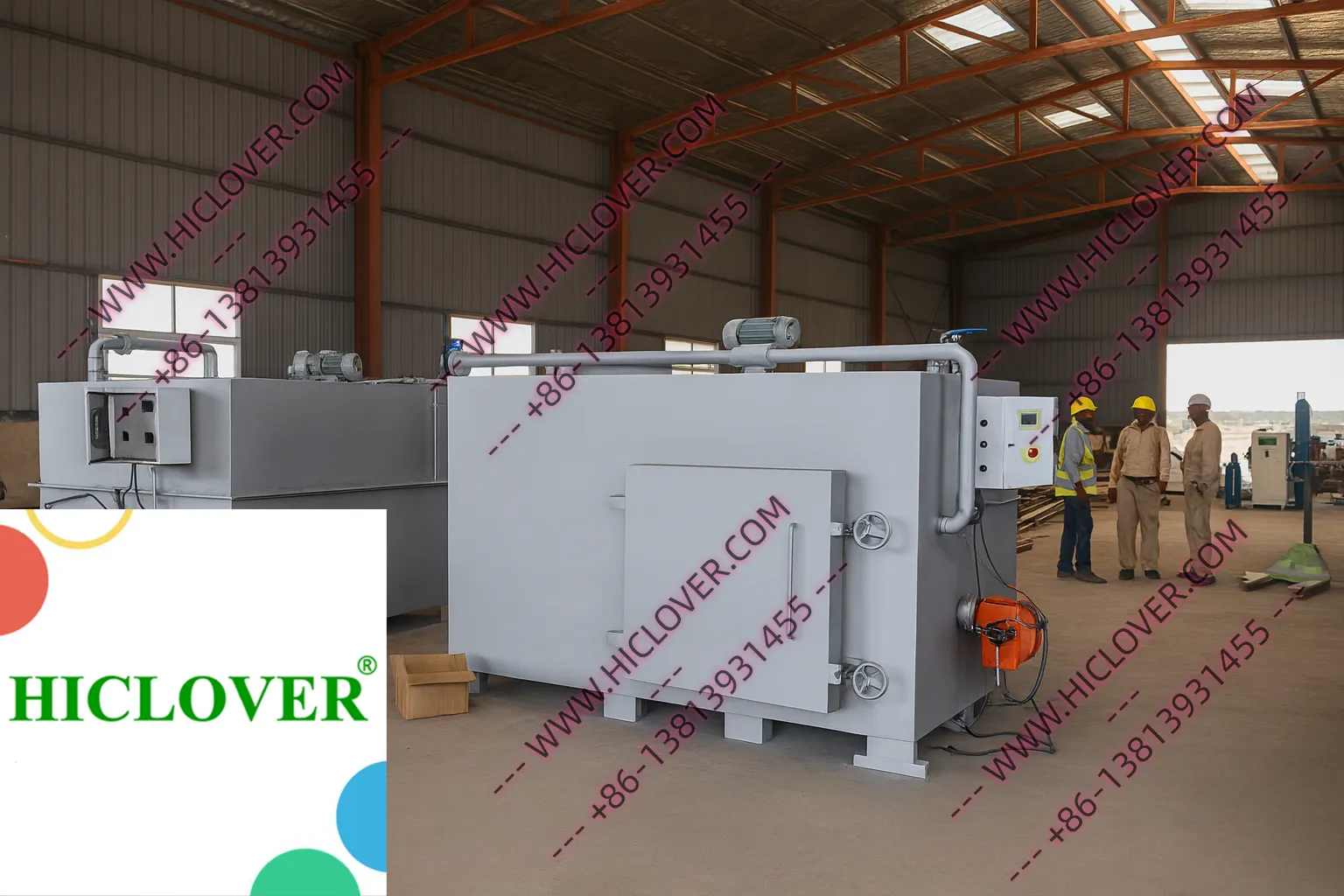
Somalia Waste Incinerator Market Report: Market Characteristics, Demand Trends, and Equipment Adaptation
Somalia’s evolving waste management landscape—shaped by urban growth, humanitarian operations, and limited disposal infrastructure—has intensified the need for reliable, high-temperature waste incinerators. Major cities such as Mogadishu, Hargeisa, Bosaso, Kismayo, and Baidoa face mounting pressure to manage municipal, medical, and camp-generated waste safely. The presence of the United Nations, UNDP, WHO, and various international NGOs further drives demand for compliant, ready-to-deploy incineration systems suitable for field conditions.
Market Characteristics in Somalia
Several structural factors define Somalia’s waste environment:
-
Rapid population concentration in Mogadishu and Hargeisa, creating substantial municipal waste with high organic and mixed content.
-
Large humanitarian and peacekeeping operations, particularly in Baidoa, Kismayo, and Beledweyne, where UN and NGO field bases require dependable on-site waste treatment solutions.
-
Expanding healthcare and emergency medical facilities, which generate significant biomedical waste requiring safe thermal destruction.
-
Limited landfill availability, especially in coastal cities like Bosaso and Berbera, prompting institutions to opt for compact incinerators.
-
Arid and coastal climate constraints, which demand durable, heat-resistant, and corrosion-resistant equipment structures.
These challenges have transformed the waste incinerator market into a necessity rather than an optional investment.
Market Demand and Emerging Trends
Somalia’s demand for waste incinerators is growing across several sectors:
• Medical and laboratory waste treatment, especially in Mogadishu, Hargeisa, and Garowe.
• UN and NGO field operations, with requirements for mobile, containerized, and plug-and-play systems usable in remote bases and temporary camps.
• Municipal authorities, seeking decentralized waste treatment units in Kismayo, Baidoa, and Dhusamareb.
• Humanitarian logistics hubs, including operations in Doolow and Luuq, where high mobility and minimal installation effort are crucial.
A major trend is the preference for containerized, field-ready incinerators, which allow rapid deployment, relocation, and secure operation in areas with limited infrastructure.
Suitability of Incinerators for Local Somali Conditions
Waste characteristics in Somalia often include high organic content, animal remains, medical disposables, and mixed urban refuse. Equipment must therefore offer:
-
High-temperature dual-chamber combustion for complete destruction.
-
Fuel efficiency, especially in areas where diesel supply fluctuates.
-
Robust insulation and refractory lining for continuous operation in high-temperature climates.
-
Minimal civil works, suitable for unstable or temporary sites.
-
Ease of maintenance, due to limited technical support in regional towns.
Systems with mobility, structural strength, and flexible loading options align best with Somali operational realities.
HICLOVER Incinerators and Their Advantages in Somalia
HICLOVER systems match the environmental and logistical challenges common across Somalia. A randomly highlighted focus theme—operational reliability in humanitarian environments—illustrates why these units are widely used in African crisis zones.
Key advantages include:
-
Containerized deployment, ideal for UN camps and NGO facilities in Baidoa, Kismayo, and Beledweyne, allowing the unit to be installed quickly with minimal groundwork.
-
Top-loading and side-loading options, suitable for mixed municipal waste, medical waste bags, and high-volume organic materials common in Mogadishu and Hargeisa.
-
Durable dual-chamber combustion system, enabling smokeless operation in population-dense environments.
-
Heavy-duty refractory structure, suitable for Somalia’s hot climate and long continuous operation cycles.
-
Ease of relocation, especially valuable for peacekeeping missions and humanitarian logistic routes between Doolow, Luuq, and Galkayo.
-
Fuel-flexible burner configurations, allowing adaptation to uncertain fuel supply chains.
The combination of portability, stability, and field resilience makes HICLOVER an effective solution for local authorities and international agencies.
Additional Focus Theme: Strengthening Humanitarian Waste Compliance
Somalia hosts a large number of international organizations, including UNSOS, UNICEF, WFP, and medical NGOs. These agencies require equipment that aligns with internal environmental safety protocols and ensures reliable, repeatable waste destruction. High-temperature incinerators not only protect public health in camp environments but also reduce contamination risks in unstable regions. Somalia’s humanitarian sector is therefore one of the strongest adopters of modern thermal waste treatment systems.
Market Outlook
Somalia’s waste incineration market is expected to expand steadily as urbanization increases, humanitarian operations continue, and national health infrastructure modernizes. International donors are likely to remain a major part of market demand, while local governments gradually adopt decentralized incineration solutions for city and district-level waste management.
Somalia’s unique combination of urban growth, humanitarian presence, and limited landfill infrastructure has created sustained demand for efficient, durable waste incinerators. From Mogadishu to Hargeisa, Baidoa to Kismayo, operators require systems that function reliably in challenging environments. HICLOVER incinerators offer strong compatibility with Somalia’s conditions, providing durability, mobility, and high-temperature performance suited to municipal, medical, and humanitarian waste streams.
2025-12-11/08:51:59
|
Incinerator Items/Model |
HICLOVER TS100(PLC)
|
|
Burn Rate (Average) |
100kg/hour |
|
Feed Capacity(Average) |
150kg/feeding |
|
Control Mode |
PLC Automatic |
|
Intelligent Sensor |
Continuously Feeding with Worker Protection |
|
High Temperature Retention(HTR) |
Yes (Adjustable) |
|
Intelligent Save Fuel Function |
Yes |
|
Primary Combustion Chamber |
1200Liters(1.2m3) |
|
Internal Dimensions |
120x100x100cm |
|
Secondary Chamber |
600L |
|
Yes |
|
|
Feed Mode |
Manual |
|
Burner Type |
Italy Brand |
|
Temperature Monitor |
Yes |
|
Temperature Thermometer |
Corundum Probe Tube, 1400℃Rate. |
|
Temperature Protection |
Yes |
|
Automatic Cooling |
Yes |
|
Automatic False Alarm |
Yes |
|
Automatic Protection Operator(APO) |
Yes |
|
Time Setting |
Yes |
|
Progress Display Bar |
3.7 in” LCD Screen |
|
Oil Tank |
200L |
|
Chimney Type |
Stainless Steel 304 |
|
1st. Chamber Temperature |
800℃–1000℃ |
|
2nd. Chamber Temperature |
1000℃-1300℃ |
|
Residency Time |
2.0 Sec. |
|
Gross Weight |
7000kg |
|
External Dimensions |
270x170x190cm(Incinerator Main Body) |
|
Burner operation |
Automatic On/Off |
|
Dry Scrubber |
Optional |
|
Optional |
|
|
Top Loading Door |
Optional |
|
Asbestos Mercury Material |
None |
|
Heat Heart Technology(HHT) |
Optional |
|
Optional |
|
|
Dual Control Mode(Manual/Automatic) |
Optional |
|
Temperature Record |
Optional |
|
Enhanced Temperature Thermometer |
Optional |
|
Incinerator Operator PPE Kits |
Optional |
|
Backup Spare Parts Kits |
Optional |
|
Mobile Type |
Optional:Containerized/Trailer/Sledge Optional |


Comments are closed