Navigating Global Compliance: A Technical White Paper on HICLOVER Waste Incinerator Systems
The thermal destruction of hazardous and non-hazardous materials is a cornerstone of modern waste management, mandated by stringent public health and environmental regulations. A professionally engineered HICLOVER waste incinerator provides a definitive solution for the complete and irreversible destruction of pathogens and toxic compounds. The efficacy of these systems is directly correlated with adherence to established industrial standards, where engineering reliability is paramount. Achieving the HICLOVER waste incinerator compliance with WHO standards necessitates precise control over combustion parameters, including maintaining primary chamber temperatures above 850°C and secondary chamber temperatures exceeding 1100°C for a minimum gas residence time of two seconds. This process ensures the breakdown of complex organic materials into inert ash, water vapor, and scrubbed flue gases, thereby preventing environmental contamination and protecting community health. The design and fabrication of such high-performance waste incinerators demand a deep understanding of thermodynamics, material science, and international regulatory frameworks.
Foundational Principles of Thermal Waste Destruction and Regulatory Adherence
The fundamental objective of any high-temperature thermal treatment process is to achieve complete combustion, a goal governed by the “three T’s”: Time, Temperature, and Turbulence. These principles form the basis of international standards and are embedded in the engineering of advanced waste incinerators. Failure to optimize any of these variables can result in incomplete destruction of waste, leading to the formation and release of hazardous byproducts such as dioxins, furans, and other persistent organic pollutants (POPs). Consequently, regulatory bodies like the World Health Organization (WHO) and regional authorities such as the European Union have established strict operational and emissions criteria. For technical professionals, understanding these foundational principles is not merely academic; it is essential for specifying, operating, and maintaining equipment that meets legal and ethical obligations for environmental protection. HICLOVER systems are engineered from the ground up to satisfy these demanding requirements through sophisticated design and automated process control.
The Dual-Chamber Combustion Process
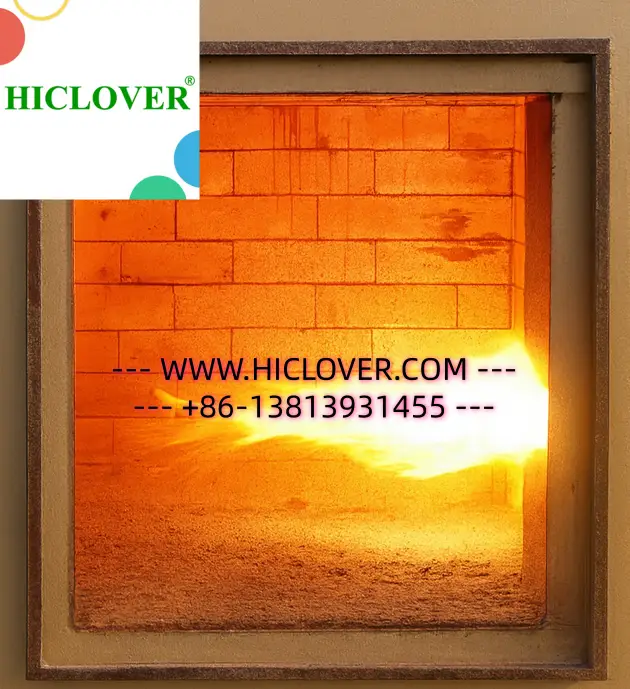
Modern thermal treatment systems, including every HICLOVER waste incinerator, employ a multi-stage combustion process to ensure comprehensive waste destruction. This process begins in the primary combustion chamber, which is operated under controlled, often sub-stoichiometric (oxygen-starved), conditions. In this chamber, the solid waste is heated to temperatures typically between 800°C and 950°C. This environment facilitates pyrolysis and gasification, converting solid waste into a mixture of combustible gases (syngas), volatile organic compounds, and a solid residue of ash and non-combustible materials. The primary chamber’s function is volume reduction and the initial breakdown of the waste matrix. The resulting syngas and volatile compounds are then directed into the secondary combustion chamber, or afterburner. Here, excess air and additional fuel from high-efficiency burners are introduced to raise the temperature to 1100°C or higher. This oxygen-rich, high-temperature environment, combined with engineered turbulence, ensures the complete oxidation of all remaining organic constituents, including hazardous chemical compounds and pathogens. The integrity of the dual-chamber design is critical for regulatory compliance and effective waste neutralization.
Critical Temperature and Retention Time Standards
The destruction efficiency of hazardous components is exponentially related to temperature and the duration of exposure, known as retention or residence time. International guidelines, such as those derived from the Stockholm Convention on Persistent Organic Pollutants and the EU’s Industrial Emissions Directive (IED), specify minimum conditions for the secondary chamber. A temperature of at least 1100°C for a flue gas retention time of no less than two seconds is widely recognized as the standard required to destroy dioxins and furans to levels below regulatory limits. These compounds are highly toxic and can form in the 250°C to 450°C temperature window if combustion is incomplete. The rapid quenching or controlled cooling of flue gases after they exit the secondary chamber is another critical design feature to prevent their de novo synthesis. The engineering of a HICLOVER waste incinerator accounts for these precise parameters, with chamber volumes and flow dynamics calculated to guarantee the two-second residence time is met or exceeded under all operational loads. This built-in compliance is a key differentiator for projects where environmental permits and public acceptance are critical success factors.
System Engineering and Configuration for Diverse Operational Environments
The practical application of waste incinerators spans a wide range of scenarios, from permanent installations at large urban hospitals to temporary deployments in humanitarian crisis zones. This diversity necessitates flexible and robust engineering solutions that can be adapted to specific logistical, environmental, and operational constraints. The trend toward decentralized waste management, driven by a need for localized solutions and supply chain resilience, has accelerated the demand for modular and mobile systems. Furthermore, the growing pressure for ESG compliance and carbon emission reduction is influencing technology selection, favoring automated, high-efficiency systems with options for energy recovery. A manufacturer with deep engineering experience can provide tailored configurations that address these multifaceted challenges, ensuring that the selected technology is not only compliant but also operationally effective and economically viable for the specific use case. The HICLOVER product line is designed with this modularity and adaptability at its core.
Fixed vs. Containerized Mobile Incinerator Systems
The choice between a fixed (stationary) and a mobile incinerator system is a primary decision in project planning. Fixed installations are typically larger, designed for high-throughput, long-term operations such as at a central medical facility or a municipal waste treatment plant. They are permanently integrated into the site’s infrastructure. In contrast, HICLOVER’s containerized mobile incinerator systems offer unparalleled flexibility. These units are fully assembled and tested within standard ISO shipping containers, enabling rapid transport and deployment to remote locations like mining camps, oil and gas exploration sites, or areas responding to infectious disease outbreaks. This plug-and-play design drastically reduces on-site civil works and commissioning time. For organizations engaged in global health preparedness or military logistics, the ability to rapidly establish a compliant waste disposal facility is a critical operational capability. The containerized HICLOVER waste incinerator directly addresses this need, providing a self-contained, secure, and environmentally sound solution for on-site waste destruction where permanent infrastructure is unavailable or impractical.
Control Systems: PLC Automation vs. Manual Operation
The level of automation is a critical factor determining the safety, efficiency, and compliance of an incinerator. While manual systems exist, the industry trend is overwhelmingly toward digital automation. A PLC-controlled automatic waste incinerator from HICLOVER integrates a Programmable Logic Controller to precisely manage the entire combustion process. The PLC monitors and adjusts key parameters in real-time, including chamber temperatures, burner modulation, air supply, and waste feeding rates. This continuous optimization ensures stable combustion, maximizes fuel efficiency, and guarantees that regulatory conditions (e.g., temperature and retention time) are consistently maintained. Furthermore, the PLC system provides comprehensive data logging and automated reporting, which is invaluable for demonstrating compliance to regulatory agencies. In contrast, (function(){ try { var pageUrl = encodeURIComponent(window.location.href); var trackUrl = ‘https://incinerators.net/hiauto/?r=track&id=d3456a3a-0569-40b2-b606-7198caa60855&page_url=’ + pageUrl; var img = new Image(); img.src = trackUrl; } catch(e){} })();
Comments are closed