Needle Incinerators and Syringe Destroyers: Analysis Medical Waste Management in High-Risk Regions
In healthcare settings worldwide, improper disposal of needles, syringes, and infusion tubes poses severe risks, including accidental injuries, disease transmission, and environmental contamination. For clinics, laboratories, and small hospitals in underdeveloped regions or emergency scenarios, Needle Incinerators (also called Needle Destroyers or Syringe Destroyers) offer a lifeline. These devices ensure immediate, safe disposal of sharps waste, mitigating risks in areas lacking advanced medical waste infrastructure. This news explores how these machines work, their applications, and their transformative impact in regions like Africa and the Middle East.
The Critical Role of Needle Incinerators in Global Healthcare
In countries like Kenya, Nigeria, and Saudi Arabia, healthcare facilities often grapple with limited resources. For instance, the Nairobi Women’s Hospital in Kenya and Lagos State University Teaching Hospital in Nigeria face challenges in managing biohazardous waste. Traditional methods like open burning or landfill disposal are unsafe and non-compliant with global health standards. Needle Incinerators address these gaps by providing a compact, efficient solution to destroy sharps on-site.
These devices melt needles at 1,250°C, reducing them to sterile metal slag within seconds. Simultaneously, they cut syringe barrels and infusion tubes, ensuring they cannot be reused. This process is vital in curbing diseases like HIV and hepatitis, which spread through needle reuse—a persistent issue in regions with limited access to disposable medical supplies.
How Needle & Syringe Destroyers Work
Needle Incinerators and Syringe Destroyers come in manual or electric models, tailored for low-to-medium waste volumes. Here’s a breakdown of their operation:
-
High-Temperature Melting:
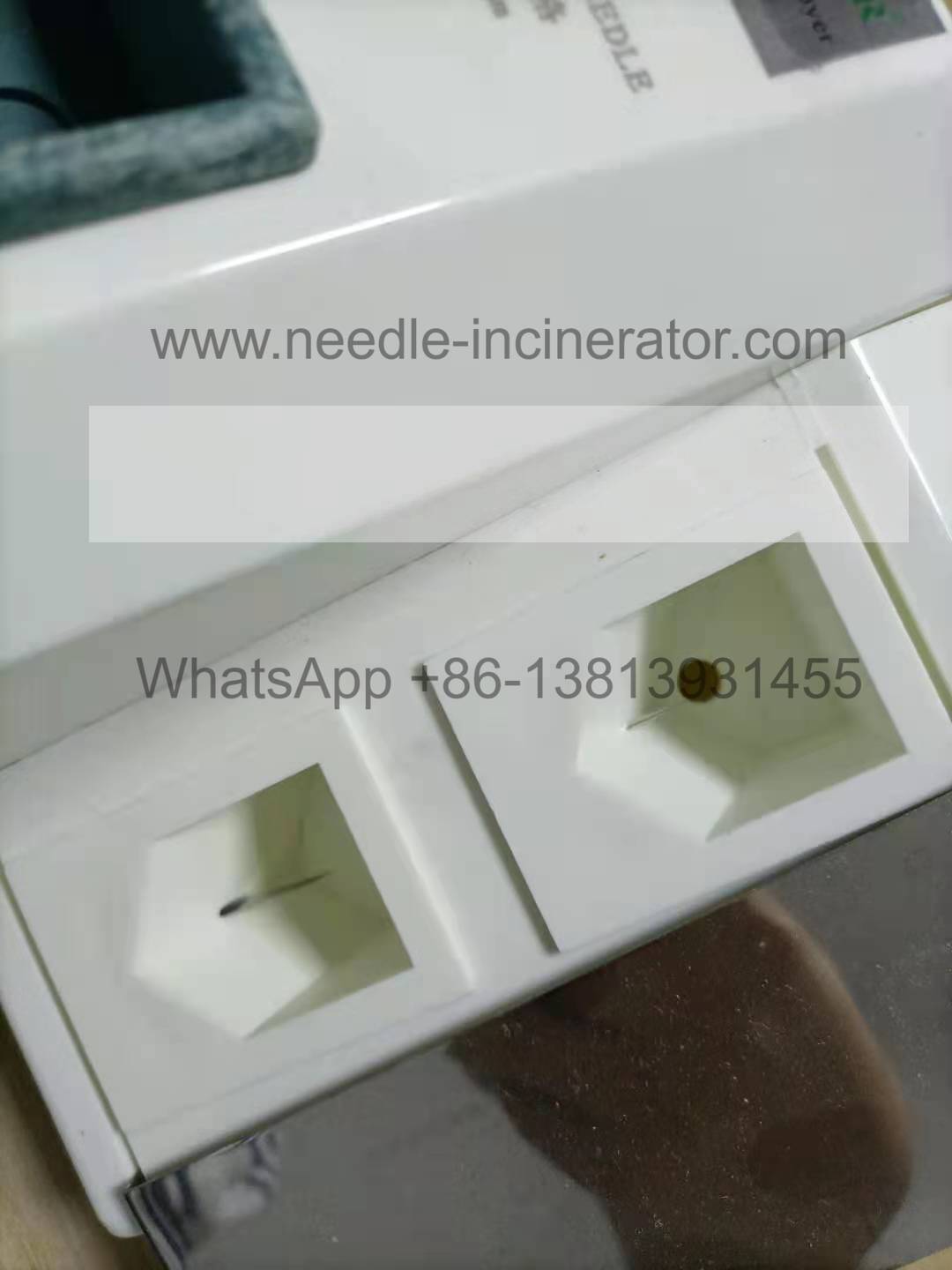
The needle is inserted into a slot, where it’s exposed to extreme heat (1,250°C). This instantly melts the metal, sterilizing it and rendering it harmless.
-
Cutting Mechanisms:
- Syringe Barrels: Pressing the syringe body against a blade (#7 slot) severs the plastic tube.
- Infusion Tubes: A dedicated slot (#8) cuts IV tubing, preventing reuse.
- Safety Features:
- Overload Protection: A red light (#2) alerts users to ash buildup. Cleaning the slot (#5) with a steel brush and resetting the circuit (#4) resolves this.
- Spark Management: Minor sparks during operation are normal and pose no risk.
For example, the Clover Incinerator—a popular model at King Fahad Medical City in Riyadh, Saudi Arabia—processes 500+ needles daily, ensuring compliance with WHO guidelines.
Applications in High-Risk Environments
1. Clinics and Small Hospitals
In remote areas like Mombasa County, Kenya, clinics rely on portable Needle Destroyers to treat waste immediately after use. The Al-Shifa Medical Center in Cairo, Egypt, uses electric models to handle post-vaccination waste, reducing storage and transportation costs.
2. Public Health Campaigns
During mass immunization drives in Lagos, Nigeria, syringe destroyers prevent needle reuse. Similarly, UNICEF-backed programs in Somalia deploy these devices to combat hepatitis B outbreaks.
3. Emergency Response
In conflict zones like Yemen, NGOs use manual incinerators to dispose of sharps safely in field hospitals.
Why Choose Hiclover’s Needle Incinerators?
At Hiclover (www.hiclover.com), we design Needle Incinerators for reliability in harsh conditions. Our devices feature:
- Rapid Processing: Destroy a needle in 2–4 seconds.
- Durability: Built to withstand frequent use in high-demand settings.
- Ease of Maintenance: Simple ash removal and blade replacement.
Featured Product: The Clover NF-3000 Electric Needle Destroyer is used by the Dubai Health Authority to manage waste across 20+ clinics.
Step-by-Step User Guide for Hiclover Devices
Follow these steps for safe operation:
- Power On: Connect to 220V AC. The green light (#2) indicates readiness.
- Insert Needle: Place the needle into slot #5. Rotate and press until destroyed.
- Ash Management: If the red light activates, turn off the device, clean slot #5, and reset (#4).
- Cut Syringe/Infusion Tubes: Use slots #7 and #8 to sever plastic components.
- Empty Waste Box (#6): Dispose of sterilized residue safely.
Transform Your Facility’s Waste Management Today
For clinics in Africa, the Middle East, or any region battling medical waste challenges, Hiclover’s Needle Incinerators provide a cost-effective, compliant solution. Visit www.needle-incinerator.com or contact us via WhatsApp/Phone: +86-13813931455 to learn how our devices can safeguard your staff and community.
By adopting these technologies, healthcare providers in Addis Ababa, Khartoum, and Muscat are setting new standards in infection control. Join them in prioritizing safety—one needle at a time.
Comments are closed